UAV Thermal Management, Advanced Heating, and Custom Propulsion Solutions
How Pelonis Technologies Supports UAV Design Engineers
Unmanned Aerial Systems (UAS) operate under rigid Size, Weight, and Power (SWaP) limitations. Design engineers must maximize payload capacity while managing severe internal heat from hardware, often within enclosures where passive cooling alone is insufficient.
Pelonis Technologies collaborates directly with defense and commercial contractors to provide complete thermal and motion control systems. The hardware sections below cover the specific components used to regulate sensitive payloads and maintain flight performance across extreme environments.
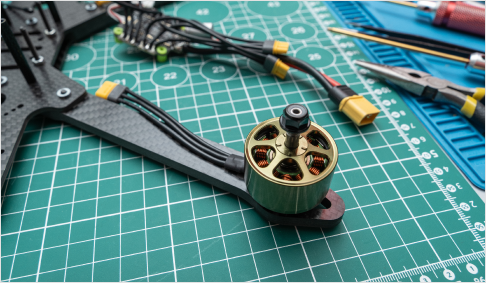
Advanced UAV Propulsion: The ADM Drone Motor Platform
Active Airflow Management: Precision Drone Cooling Fans & UAV Cooling Blowers
Enclosed drone payloads generate intense thermal loads during continuous operation. Pelonis Technologies manufactures compact Drone Cooling Fans and UAV Cooling Blowers sized for the tight spatial constraints of enclosed drone payloads. These active airflow components prevent delicate flight controllers and optical sensors from overheating mid-flight. Our engineering team customizes every fan design to fit within tight spatial boundaries while keeping power draw within the SWaP budget for the target airframe.
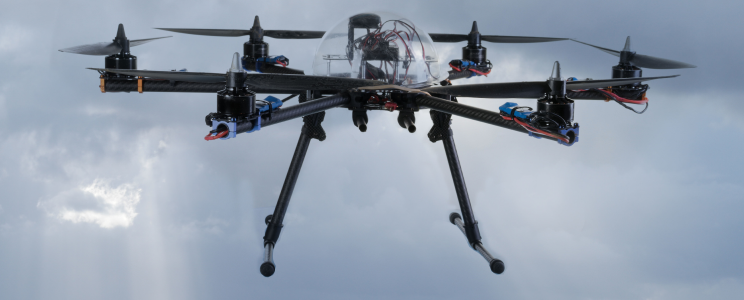
Total Climate Regulation: Ultra-Thin Flexible Heaters for UAVs
Drones face immediate operational failures in cold weather or humid environments. Rapid temperature swings create lens condensation that ruins optical data capture. Furthermore, atmospheric icing destroys propeller efficiency by up to 80% in just 60 seconds at -10 °C. We supply ultra-thin flexible heaters measuring less than 0.22 mm thick. Commercial operators install these lightweight heaters to stop agricultural mapping cameras from fogging. Defense contractors bond them directly to battery cells and integrate them into electro-thermal ice protection systems (IPS) on propeller blades.
Strategic Sourcing: The Drone Supply Chain Advantage
Procurement managers struggle with delayed shipments and compliance risks when navigating opaque globalized component markets. Pelonis Technologies resolves these bottlenecks through documented sourcing practices and supplier relationships. This sourcing approach supports compliance with NDAA requirements for North American and European defense contractors. With 35 years of aerospace engineering experience, Pelonis Technologies delivers components built to last.

Discuss Your UAV Thermal Management Requirements With Pelonis
Securing reliable UAV Thermal Management Solutions is essential to the success of your aerial missions. Pelonis Technologies engineers specialize in Drone Motors and UAV Motors built to the SWaP tolerances required by defense and commercial UAV programs. Partner with our technical team to source dependable Custom Drone Propulsion and Aerospace Brushless Motors for your next platform today.
Contact the Pelonis engineering team to discuss your UAV thermal management requirements, or request a quote to begin your component specification.