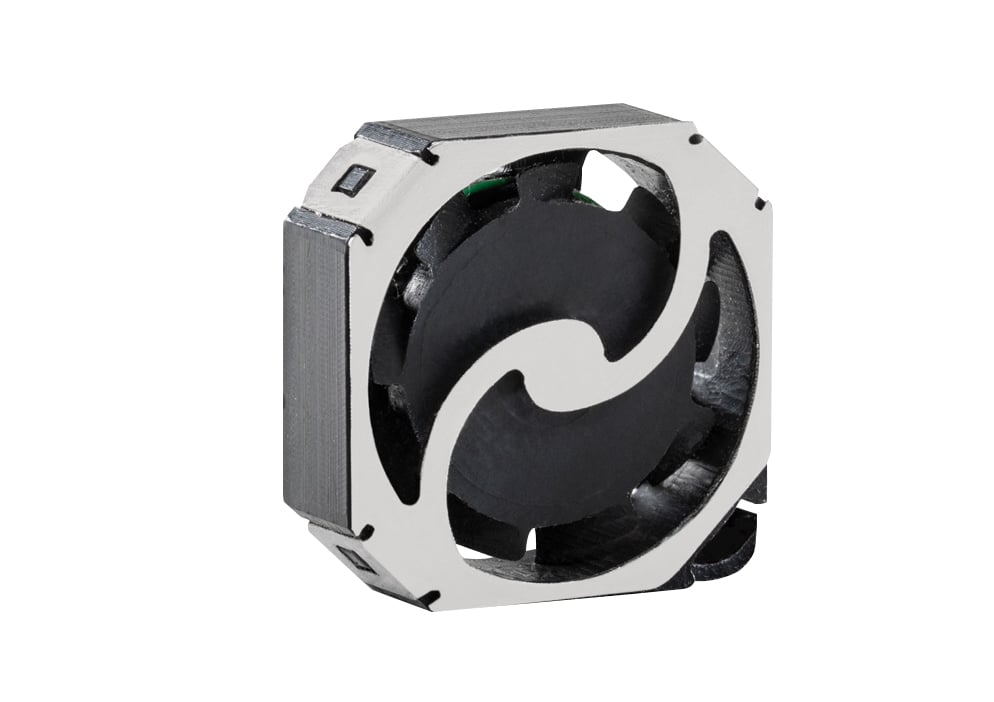
As aerospace systems become more compact and incorporate higher-performance electronics, thermal management has become a limiting factor in system design. Managing avionic heat flux is no longer a secondary consideration; it directly affects system reliability and operational safety.
From dense electronics in UAVs to the environmental constraints of cooling for Mars rovers, engineers are increasingly evaluating advanced materials and motion-control components to manage heat effectively.
Pelonis Technologies provides thermal management and motion control components for aerospace applications, including micro-fans, blowers, and precision motors designed for compact, high-performance systems.
Modern avionics systems, including flight computers, radar, and communication arrays, generate significant heat within compact enclosures. In UAV applications, where every gram of weight and millimeter of space matters, traditional cooling methods often fall short.
Pelonis Technologies offers the Advanced Drone Motor (ADM), designed for UAV applications requiring compact form factors and controlled torque output.
The ADM platform is designed to support integration with smaller drone systems and can be configured to meet application-specific performance and thermal requirements.
In environments where convection cooling is unavailable, such as in space or low-atmosphere conditions, passive thermal management methods are often required.
Thermal management for Mars rover systems must account for extreme temperature variation, including high daytime heat and sub-zero nighttime conditions.
Thermal management decisions directly affect system reliability, performance, and lifespan in aerospace applications. As heat loads increase, selecting the right combination of materials, airflow, and motion control components becomes more critical.
Pelonis Technologies provides custom thermal and motion components designed for compact, high-performance environments, including aerospace systems.
Is your UAV program ready for a secure, high-performance propulsion upgrade?
Contact the team to discuss your application requirements or explore available aerospace cooling and motion control solutions.